
3 REASONS YOUR MUSCLES AREN’T HEALING
When my clients with pelvis misalignment are not aligned and pain-free within four to eight sessions, I suspect they have reinjured themselves by going to other therapists, exercising, or returning too soon to their sports. Lack of a nutritious diet and rest are other culprits. Read on for typical cases illustrating these reasons.
1. Too Much Therapy Reinjures
A client I will call Cruising Carl strained his lumbar Psoas muscle tossing wood onto a wood pile—a repetitive lift-twist motion—leaving him in “I can hardly move” pain. In three weeks he was leaving on a cruise. Carl had a session with me four days after the injury, then booked two more sessions a week apart.
After his first session with me, he went to his chiropractor who told him to do gentle stretches. Well, that tore the damaged muscle again, leaving me basically starting from scratch at his next appointment.
Carl promised he would not return to the chiropractor. However, desperate to get better before the cruise, after our second session he had physio, cupping, and saw his massage therapist twice, all in a week.
At his third appointment he arrived in serious pain after a massage that very morning. I told him if he had just kept to the three sessions with me, no other therapies, and given his body time to heal, he would have been pain-fee when he boarded the ship. Instead, too much tissue manipulation left him in agony. I told him this third session was cancelled, as more tissue manipulation would just make things worse.
Therapy by itself does not heal muscles and tissue. More therapies will not heal you faster.
Here’s how manual therapy works: it releases tension, unlocking knotted muscles and strains so the body’s own cells can repair the tissue. That repair process takes time, and it’s the reason I space sessions at least a week apart.
Too much tissue manipulation during the healing process basically took Carl back to Square One.
2. Stretching and Exercise Too Soon
I’ve bundled at least 15 clients’ cases into that of a composite client I’ll call Fitness Francie.
Fitness Francie had pulled her quad and psoas muscles on one side, causing an anterior ilium rotation, scoliosis, and sciatica. She had been living with 10/10 lower back and butt pain for months. Doctors prescribed pain medication. An X-ray report stated she had vertebral L4-L5 osteoarthritis.
If she’d had an MRI, the report could mention one or more from this list:
labral tear and/or bursitis in the hip socket;
bulging or herniated lumbar disc;
bone spur;
facet joint deterioration;
and the list goes on….
No radiologist report I have ever read has mentioned a misaligned ilium (aka innominate), which incidentally is the cause of hip and vertebral osteoarthritis and other damage. Read my blog posts on pelvis alignment.
Exercise
Francie believed experts that promote exercise and stretching as the path to healing, so she diligently had physiotherapy to build muscle. Every morning she practiced yoga, thereby stretching (and chronically damaging) her injured Psoas muscle.
Therapies
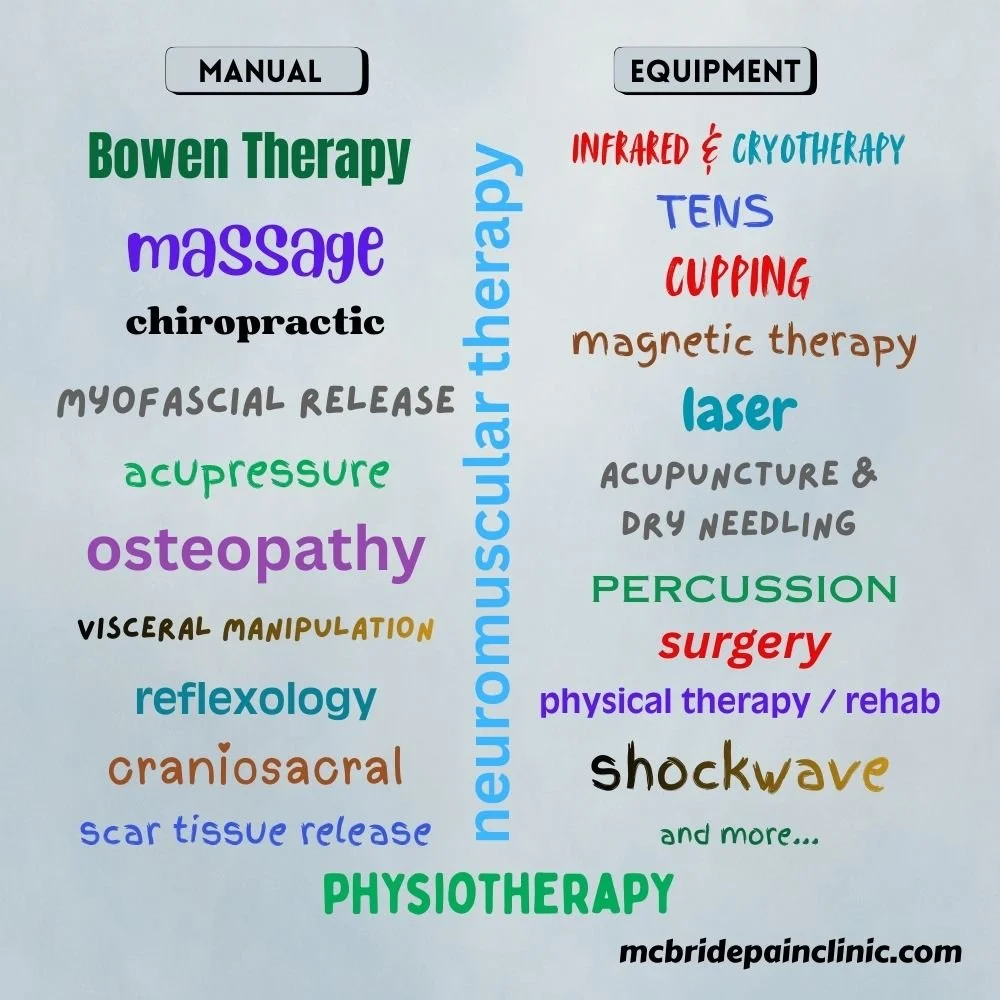
Before finding me, Francie had “tried everything” to resolve her pain. She’d had multiple sessions of chiropractic; dry needling; cupping; Active Release Technique (ART); shockwave, laser, and infrared therapies; and an injection therapy called Hydro Dissection to hydrate the muscle entrapping a painful nerve.
None of those therapies targeted the cause of Francie’s rotated ilium; i.e., the iliopsoas and quad muscles pulling her ilium forward. In fact, one physiotherapist mistakenly diagnosed an upslip on the opposite side to the anteriorly rotated ilium. (An anteriorly-rotated ilium causes the iliac crest to be low compared to the normal side.) He over-manipulated those lumbar muscles, thereby causing damage and an upslip on what had been the normal side.
Francie Found Me
When Francie finally had her first session with me, she was in pain, out of shape, and muscles had atrophied from nerve compression and disuse. Two months later, after sessions one or two weeks apart, she was aligned and pain-free. She got her life back!
But…
Anxious to get fit again, she paid in advance for several sessions of physical training. You can guess what happened. The trainer pushed Fitness Francie to do too much. Francie not only reinjured the previously damaged muscles, she injured new muscles that tried to compensate. Seeing her again in my clinic was Déjà vu all over again.
3. Poor Nutrition
I am not an expert in nutrition, I’m an engineer and body mechanic, so I’ll state this in my language: Your body is a factory with worker cells that build muscles, bone, organs, and various types of tissue. If the input materials (food) are poor quality, the final product (your body) is substandard.
The old saying “We are what we eat,” is a reminder that our body needs high quality inputs—water, oxygen, nutritious food with vitamins, minerals, protein, carbohydrates, etc.—to provide energy, manufacture new cells, and repair tissue.
A client asked, “If I fast, will I heal more quickly?” NO! A thousand times no. Your body needs nutrients to repair muscles. When you eat poorly, or not at all, your body will resort to cannibalizing itself to make the repairs. That is, your body will break down other muscle and bone to obtain the necessary materials.
Here’s a manufacturing analogy: Steel factory workers, short on supply of iron ore, start tearing down and reusing the factory’s steel beams and columns to make new steel. The factory building will eventually collapse.
Key Takeaways
Therapy by itself does not heal muscles and tissue. Space treatments at least a week apart to give damage time to heal.
More frequent therapy sessions, and multiple types of therapy all at the same time, do not help you heal faster.
Your therapist may be treating the location of your pain, not the underlying origin of your misalignment. Most North American medical professionals and therapists do not understand what causes ilium rotations nor how to fix them. I teach a workshop entitled Biomechanics of Back, Hip & Knee Pain to help educate therapists. Another option to understand the biomechanics of ilium rotation is the book Read My Hips, by Wolf Schamberger. Dr. Schamberger is a Canadian physiatrist and mechanical engineer.
Some types of therapy may not be effective for your particular issue. You should see improvement within three or four sessions.
Some types of therapy, such as stretching, reinjure muscles. If you feel worse after a few sessions, don’t return.
Healing essentials include nutritious diet and rest. Why rest? ATP is the energy-carrying molecule found in all cells. I tell my clients you can either burn your ATP on activities or on healing. Your injured body does not have enough energy to do both well. You need rest.
After an injury, start slow to regain fitness. Do not expect to regain your previous level of fitness within six weeks. Give yourself six months, starting with minimal stretching, light weights, and short periods of exercise, gradually building muscle over time. “Slow and steady wins the race.”
Questions Asked by Clients With Severe Pain Due to Pelvis Misalignment
Q.1 “Can I go skiing / hiking / running / canoeing / to the gym / participate in the (insert sport) game this weekend?”
A. No! But if you go anyway, be aware you’ll likely overdo it and be in pain again. A Fitness Francie client went hiking up a mountain a few days after her first session, reinjured her psoas, and said that my “treatment didn’t work.” The image below illustrates my reaction. Just because the pain disappeared a couple of days after a session does not mean you are 100% healed.
Q.2 “Can I empty the dishwasher / vacuum / lift the baby out of the crib / stack wood / shovel snow / lift stuff at work or home?”
A. No, your psoas is still vulnerable and damaged. Any torso twist motion is going to reinjure you. Please move with caution and give your body time to heal.
Q.3 How many days do I have to wait before I can resume my activities?
A. I tell clients to think of a cut through the skin. How long does it take to heal a cut completely? A week? Two? Like your skin, your muscles do not heal overnight either.
Q.4 “Should I get a massage on the ship?” asked Cruising Carl, the client with back pain who was about to go on a cruise.
A.

Image by Robin Higgins from Pixabay
Author Bio: Madeline McBride, M.A.Sc., P. Eng., studied civil engineering at Queen’s University and the University of Waterloo. Those mechanics and structural design courses inform her ability to assess in 3D, and problem-solve how muscle tension pulls a client’s skeletal structure out of alignment. Her engineering background, combined with several manual training modalities, produced this Canadian expert in restoring pelvis, jaw and spinal alignment. Madeline is able to resolve recent ilium rotations and related back, hip, knee and neck pain within one to four sessions. Long-standing, complex issues may take longer due to the body’s entrained compensation. Madeline teaches Biomechanics of Back, Hip, and Knee Pain in-person and on-line. Register for a workshop or read her blog posts at www.McBridePainClinic.com