
The Torticollis – Scoliosis – Hip Dysplasia Connection

This long post covers torticollis, scoliosis and hip dysplasia—all caused by contracted muscles. Some babies are born with mild cases of torticollis (tight neck muscles.) Others are born with extensive muscle tightness in their neck, torso, and pelvis that twists their bones into scoliosis and hip dysplasia. An infant may have various degrees of one issue, all, or any combo.
Part 1 - TORTICOLLIS
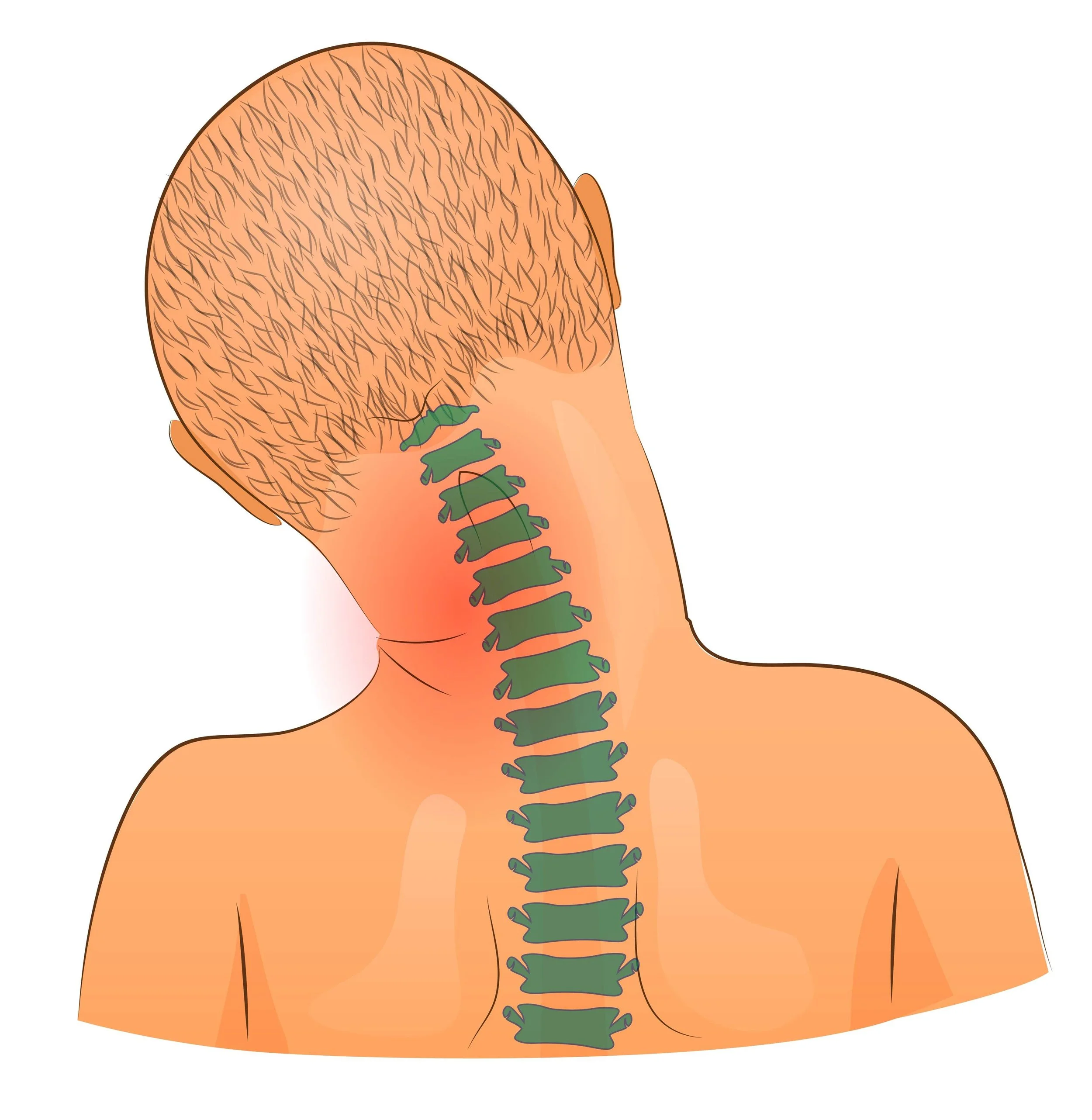
Torticollis—also known as wryneck or twisted neck—is a condition where contracted neck muscles cause the head to tilt and twist to one side. The word comes from the Latin tortus (twisted) and collum (neck).
Torticollis is Not Necessarily Caused by the SCM Muscle
In my experience, the Sternocleidomastoid (SCM) muscle is not necessarily the only muscle involved, or it may not be tight at all. Read Baby Harry’s Case below.
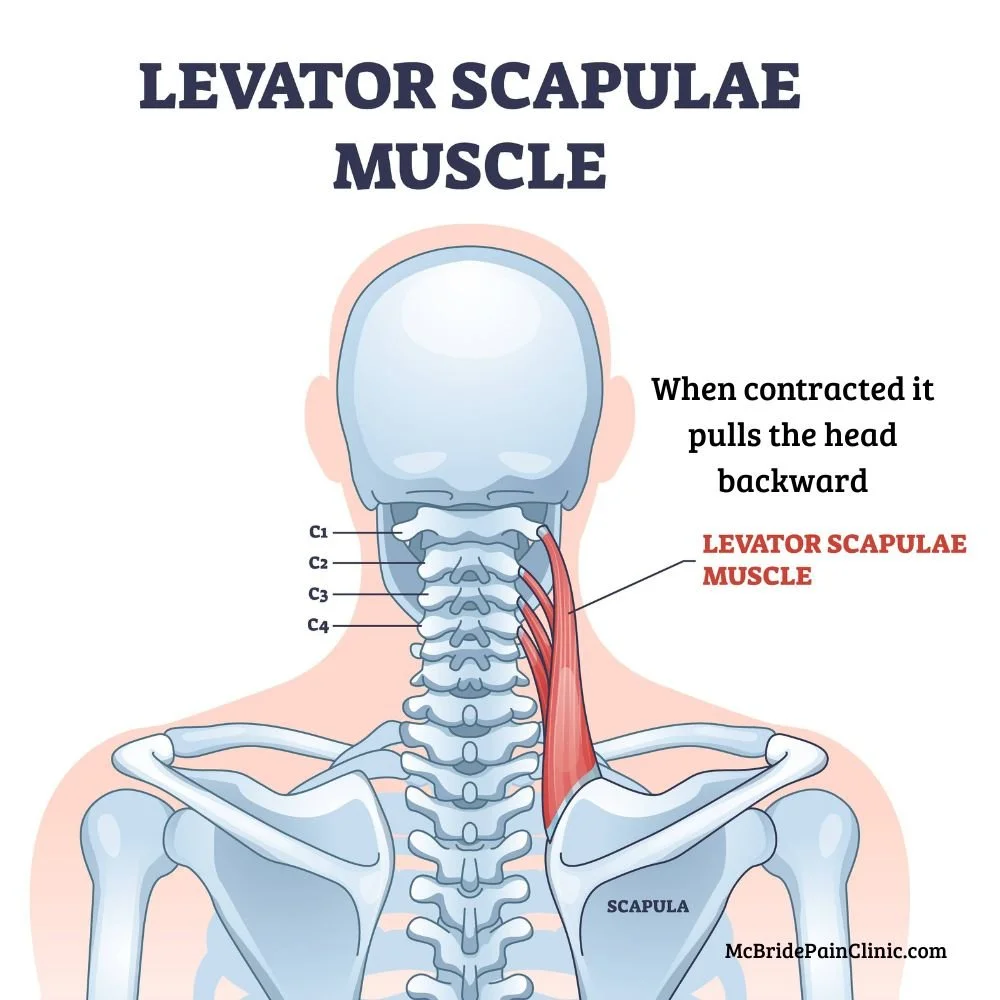
I have treated babies where the Levator scapulae was the spasmed muscle pulling the neck backward.
I treated a serious case where the right Pectoralis and SCM and Scalenes and Digastric muscle under the jaw all were too tight, pulling the baby’s head forward into the right chest and shoulder.
How to Determine Which Muscles To Treat
Option 1: Head twists backward to left or right.
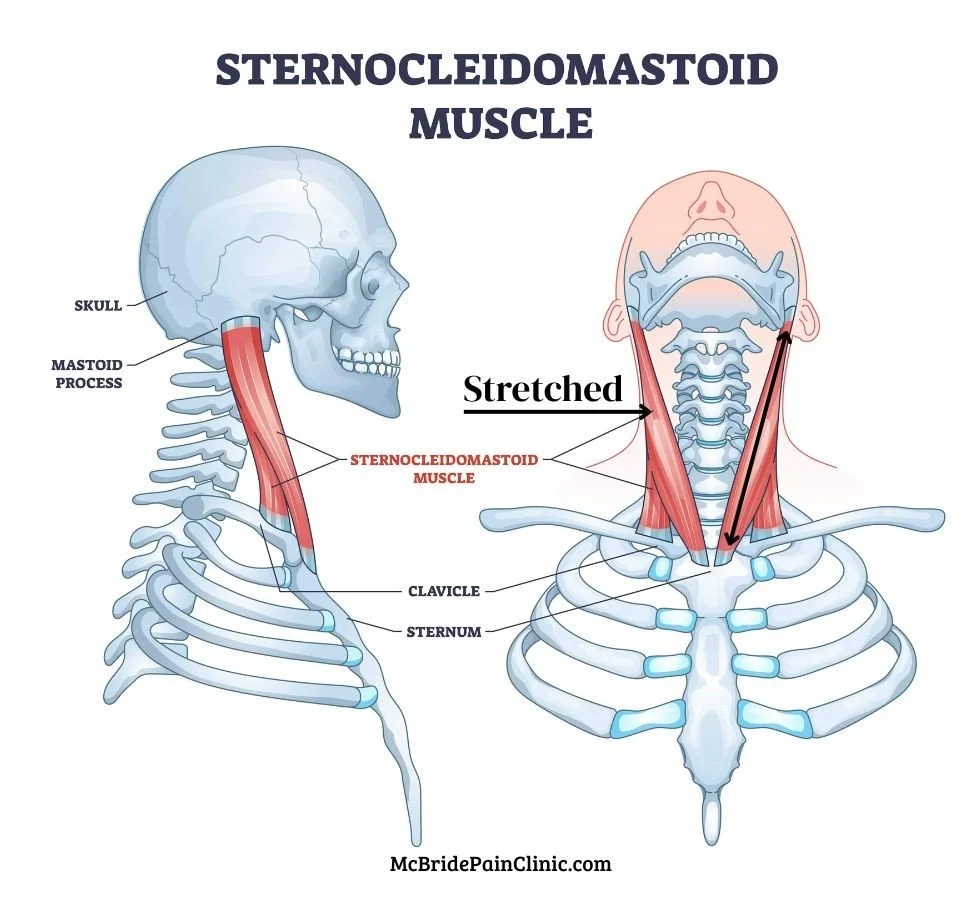
The baby laying on its back will look up to one side and behind it. The chin will be raised. A spasmed Levator scapulae muscle pulls the head posterior (backward). The SCM will be stretched and feel tight, but it is not causing the torticollis, it is reacting to the backward pull of the spasmed Levator scapulae on that side. Also check tension in all the muscles in the back that attach to the occiput (back of the skull.)
Option 2: Head twists forward to one side, left or right.
The baby laying on its back will look like the baby in the photo at the top of the post. The shortened SCM pulls the head anterior (forward) into the chest. The chin will be tucked in closer to the chest. The Pectoralis muscle on that side may be contracted as well.
Torticollis Case: Baby Harry
Chiropractic Treatment
Harry’s mother had taken him to a chiropractor when he was about 2 months old because he was constantly sleeping on his back with his head turned to the right side. It was distorting the shape of his skull.
At the first visit the chiro noted in her report that the baby’s head was turning to the right. Yet she treated him twice with active and passive stretching of the left SCM and manual therapy.
At the second visit she noted torn fibers of the left SCM had formed a knot where it attaches to the collarbone. A subsequent ultrasound confirmed that the left SCM was indeed contracted.
My Treatment
Harry’s mom brought him to see me when he was 4.5 months old.
I palpated and found that his left SCM was indeed contracted and damaged, likely caused by the chiro’s stretching and manual manipulation.
However, I discovered that the primary issue was the very contracted muscles that he was born with, between the upper right back and the neck-skull; i.e., Levator scapulae, deeper muscles such as the Semispinalis capitis, and Erector spinae. Those contracted muscles between the skull-cervical spine and the shoulder-back were pulling the head to the right and posterior.
When the chiro released the left SCM, that loosened the SCM and allowed those contracted right back muscles to drag the head even more posterior and to the right. Delicate fibers in the stretched left SCM tore. When muscle fibers are damaged, the resulting knot shortens the muscle, hence the contraction noted in the ultrasound.
The chiropractor (like most medical professionals, unfortunately) did not have a knowledge of biomechanics. The problem muscle is always the shorter, contracted muscle pulling the head closer to the body.
Harry’s mother was correct: the problem was tight muscles on the baby’s right side.
How to Resolve Torticollis
#1: Treat the Contracted Side, Not the Stretched Side
Ignore all the YouTube videos that tell you the problem is the SCM. It can alternatively be one or more muscles in the upper back and neck. Observe which direction the head is being pulled. That’s the side to treat.
#2: No Stretching!
Stretching and exercise is not going to resolve a serious muscle spasm. I can guarantee you that stretching will tear those delicate muscle fibers, like it did Baby Harry, making things worse. Even in a newborn, the neck muscle(s) is solidly contracted into what feels like a twist. The tightness will not resolve on its own.
#3: Gentle Manual Therapy Works
There are manual therapists with advanced training and a light touch, skilled in gently releasing a newborn’s tiny contracted muscles. Clients have told me their craniosacral therapist or osteopath got the job done, resolving torticollis in their infants. See the end of this post for a link to where you can find a therapist with advanced training.
I use and teach a gentle muscle release technique to unlock the spasmed muscles with the pad of my forefinger.
Palpate for tension in the contracted neck, Pectoralis and upper back muscles. Manually release the muscle contraction. An infant’s treatment is no more than 20 minutes. You may need to treat the baby once a week for three to four weeks to fully release the tension.
Correct the issue as soon as possible. Babies grow fast.
Uh-oh, those neck and upper torso muscles may not be the only newborn muscles in spasm.
Part 2 - SCOLIOSIS
If your baby was born with torticollis, that may not be the only area of the body where muscle contraction is causing alignment problems.
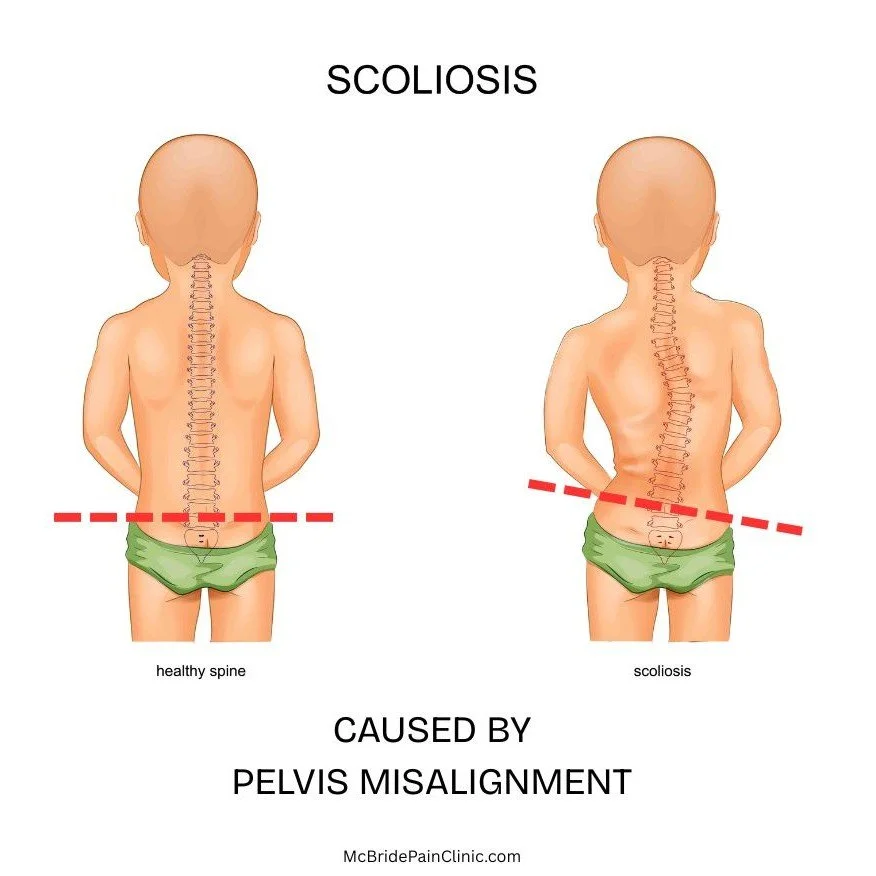
SCOLIOSIS is defined as abnormal curvature of the spine in an “S” shape.
Contracted back and iliopsoas muscles pull the ilium (aka innominate) bones of the pelvis out of alignment. One side of the pelvis will be higher than the other, as in the image above.
A misaligned pelvis causes scoliosis. The reverse is not true: a twisted spine does not cause pelvis misalignment.
Mild cases of pelvis misalignment may be not be noticed until a toddler has balance issues when it starts to walk. A client (a nurse) brought her toddler to me after noticing her child’s difficulty walking after a fall. The impact locked one of her iliopsoas muscles in contractile tension, causing an ilium anterior rotation and uneven leg lengths.
#1 Determine if Pelvis Misalignment is Causing the Scoliosis
Scoliosis will be visible on an X-ray, as will uneven iliac crests (innominate bones of the pelvis.) Note that radiologist reports may not mention innominate misalignment. I have never seen a radiologist report that mentioned pelvis misalignment (visible on the X-ray!) as a contributing cause of scoliosis.
However, a simple physical assessment of an infant will reveal pelvis (innominate) misalignment.
Lay the infant on its back, without a diaper. Reach under the body, and, with your forefingers, compare the heights of the iliac crests. See the red line in the image above. Is one higher than the other? Be careful to assess the pelvic bones, not the ribs. There is hardly any space between an infant’s ribcage and pelvis.
If one iliac crest is higher, compare the tension in the tiny left and right iliopsoas muscles in the baby’s groin. Is one iliopsoas locked in contractile tension? That’s the muscle to treat.
#2 Resolve Scoliosis Caused by Contracted Muscle
Ask the manual therapist to palpate for and release contractile tension the length of the Iliopsoas, from the inguinal ligament to the iliac crest. Follow the path of the tension down into the leg. Some leg muscles may be tight as well. Palpate anterior and posterior leg muscles for excess tension.
#3 Recheck the alignment of the iliac crests.
It they are still not even, check for tension in the lumbar muscles; e.g., Erector spinae, Quadratus lumborum and lumbar portion of the Psoas major.
Scoliosis Case: Baby Orla
Orla’s mother brought her 4 week old infant to see me after a pediatric dentist tore some masseter fibers when prying open the tiny mouth to laser tongue and buccal ties. As a result of the damage, both masseters were knotted and shortened by contractile tension. Despite the efforts of a lactation consultant, the baby was having difficulty opening her mouth to nurse.
After I released the knots in the infant’s masseters, and she was able to open her mouth wide, the mother mentioned the infant’s tight neck. In a series of two more sessions a week apart, I discovered and addressed double torticollis. I released several muscles in her neck, upper back, and one pec.
During that period of time I also treated a 19 year old female with misaligned iliac crests. She and her identical twin had grown up with mild scoliosis. Their mother happened to mention that, when babies, the twins had torticollis—one on the left, the other on the right. A craniosacral therapist had successfully resolved the neck muscle issues. What caught my attention was that the twins had mirror torticollis (corrected) and mirror scoliosis (uncorrected.)
So when I again saw Orla, I followed the tension in Orla’s back muscles to—you guessed it—one tiny contracted iliopsoas. I released that tension. I will need to recheck as she grows to ensure the pelvis stays aligned, therefore no scoliosis.
But that’s not all.
Those who take my Biomechanics of Back, Hip and Knee Pain workshop learn that an ilium anterior or posterior rotation always strains one or more buttock muscles attached to the Greater trochanter (head of the leg bone) at the hip. Orla’s case continues below…
Part 3 - HIP DISPLASIA
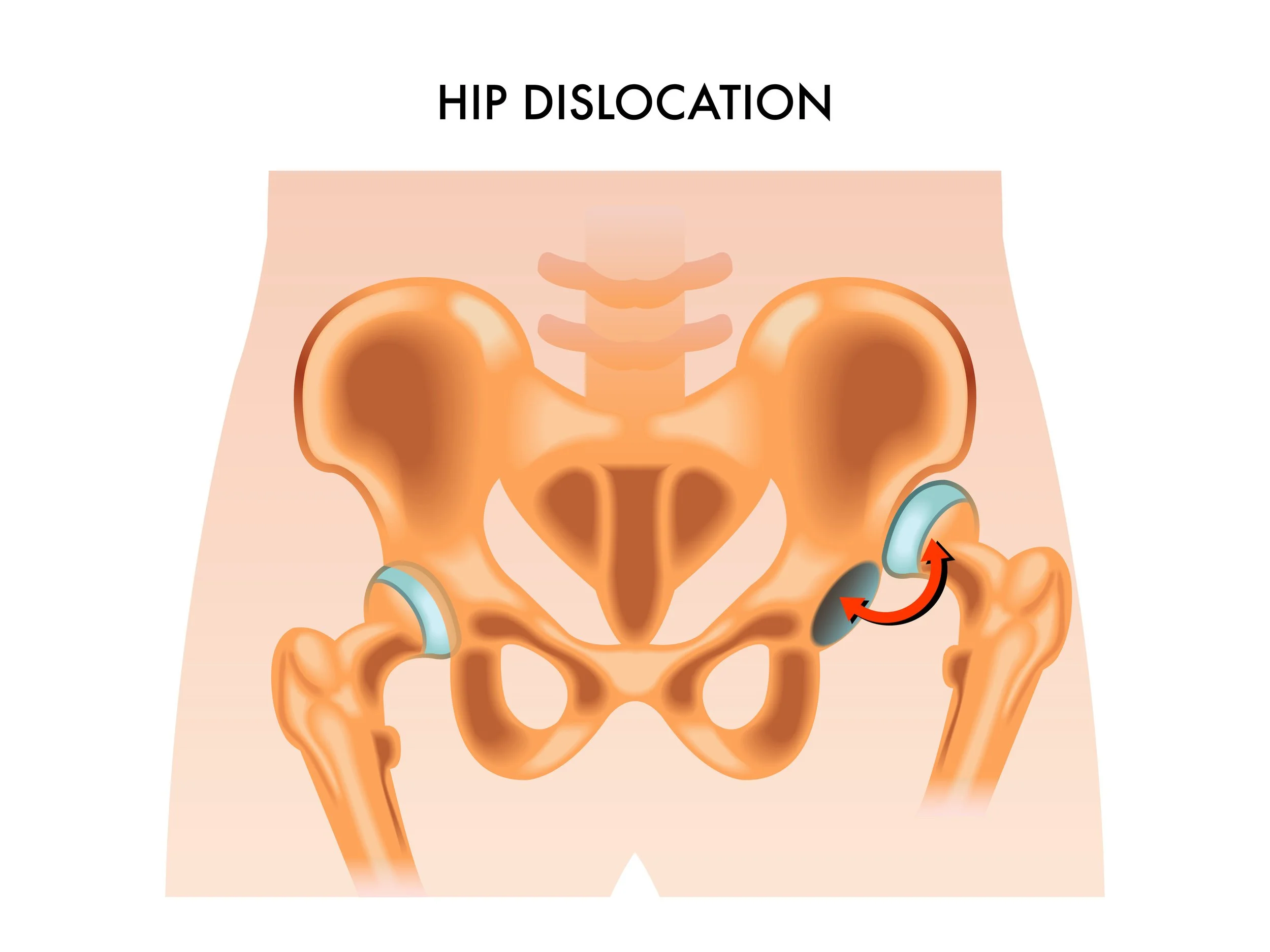
HIP DISPLASIA is a condition that happens when the bones in the hip joint (femur and hip socket) don’t fit together correctly. An X-ray will reveal the displacement.
Muscles Move Bones
Most physicians (in North America at least) are not aware of the fact that contracted muscles shift bones out of alignment. Contracted iliopsoas and posterior muscles in the buttock can dislocate the femur head. I’ve treated dozens of adults with hip pain due to this exact muscle tightness problem!
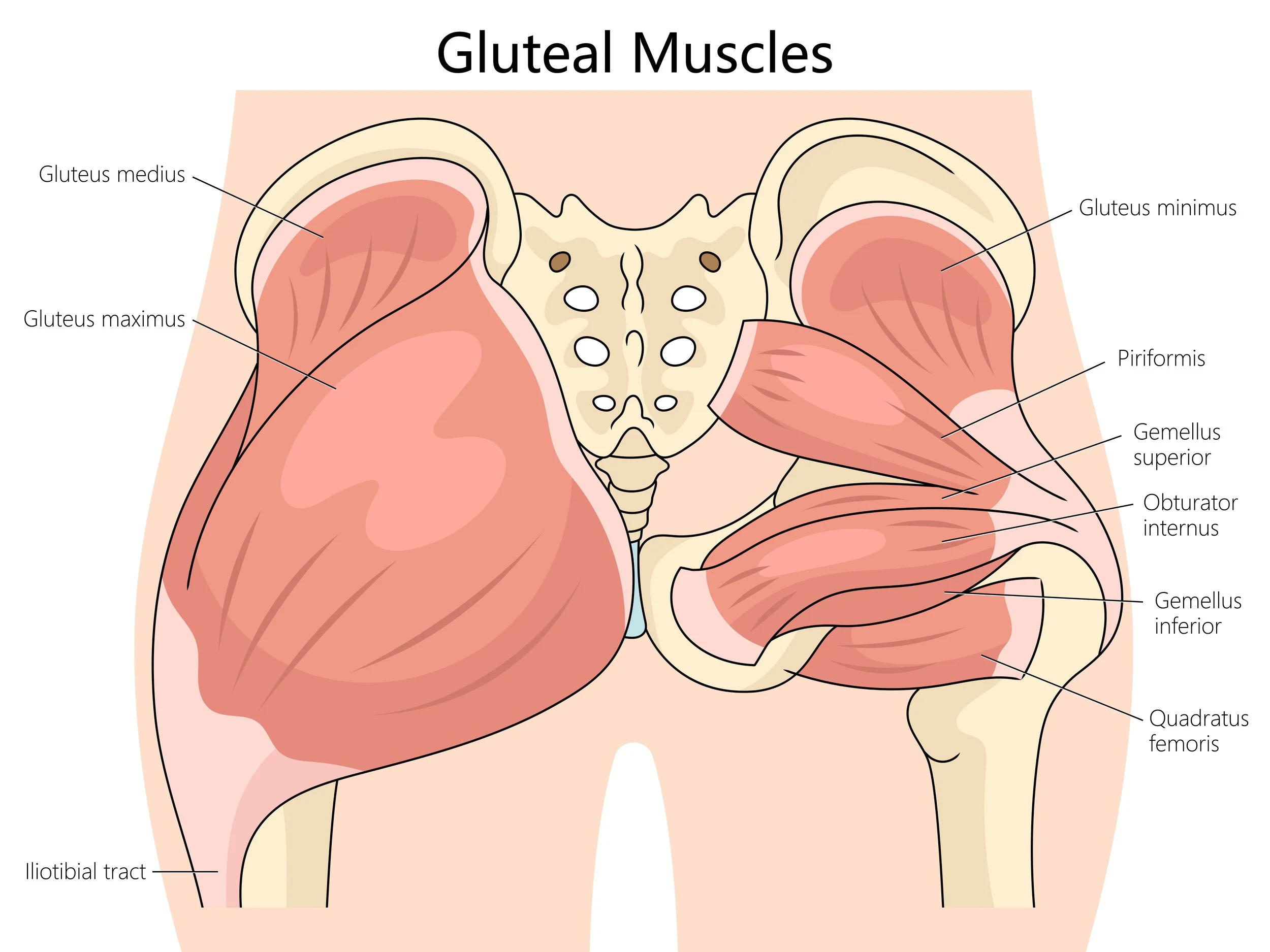
How to Resolve Hip Dysplasia Caused by Contracted Muscle
Find a manual therapist with advanced training and a gentle touch to:
#1 Assess the iliac crests and resolve any tension in the iliopsoas, etc. as in Part 2 above.
#2 Palpate for and release contractile tension in these muscles (in image top to bottom):
Gluteus medius
Gluteus minimus
Piriformis
Gemelli
Obturator externus and Obturator internus
Quadratus femoris
The Medical Go-To Treatment
A pediatrician is likely to recommend a “brace” that forces the baby’s femur into the hip socket, as in the image below, combined with exercises.
What happens when you stretch or exercise one of your own contracted, sore muscles? That causes more damage and prolongs the healing process, right? Babies are no different.

A client told me her granddaughter was born with torticollis and hip dysplasia. An osteopath corrected the torticollis. However, the child’s father, a physician, had his baby put in a brace.
Contracted muscles displace bones, pulling the Greater trochanter out of alignment in the hip socket. Be aware that manual therapy can release contracted muscles in the pelvis, allowing the Greater trochanter to line up properly in the hip socket. Manual therapy is an option!
Maybe There’s Another Cause
Hip dysplasia is not always caused by contracted muscle.
If a baby is in pain in the pelvic region (or any region), a medical exam and an X-ray are vitally important.
During my niece’s birth by caesarean section, somehow the newborn’s femur was fractured. (We never got an explanation, but assume she was dropped by one of the birth team.) My sister noticed the baby’s pain when changing her diaper. Her GP refused to believe there was a problem. Finally, my sister insisted on an X-ray. The physician actually cried when reporting the baby’s leg fracture at the hip. Physicians make mistakes too.
Hip Dysplasia Case: Baby Orla, continued
Infant Orla had the works: torticollis, scoliosis (contracted Iliopsoas and Erector spinae), and likely hip dysplasia (though there was no X-ray confirmation.) I saw her at four, five and six weeks for short sessions at which I released the masseters, torticollis, back muscles and iliopsoas.
At 3 months, when assessing tension in her glute muscles with two fingers, I pressed overly firmly through her diaper. Oops. Those muscles were so tender she started to cry. End of session. Lesson learned for next time: assess for muscle tension on bare skin.
This is a child who will require regular follow up as she grows.
Where to Find a Manual Therapist With the Skillset
Upledger Institute and Barral Institute train massage therapists, craniosacral therapists, osteopaths, physiotherapists, Bowen therapists, and other manual therapists worldwide to lightly follow and release patterns of tension and restriction. Look for a practitioner in your area who has completed Craniosacral CS1 & 2, CSP1 & 2 for Pediatrics, or the Visceral Manipulation (VM) series https://www.iahp.com/search
Biomechanics training is not included in Upledger or Barral courses, so I recommend that whomever you select first reads this post and my other posts on the topic of myoskeletal alignment. Otherwise, like Baby Harry’s chiropractor, the therapist may treat the stretched, tight, muscle instead of the contracted muscle. Please don’t take that chance.
SUMMARY: It’s Never Just One Muscle
If your baby was born with torticollis, that may not be the only area of the body where muscle contraction is causing alignment problems. My clinical experience is that torticollis, scoliosis and hip dysplasia are not separate conditions in newborns. If you find one issue, check for the others. In fact, palpate muscles in the entire body.
Do not delay treatment. Babies grow fast!
Author Bio: Madeline McBride, M.A.Sc., P. Eng., studied civil engineering at Queen’s University and the University of Waterloo. Those mechanics and structural design courses inform her ability to assess in 3D, and problem-solve how muscle tension pulls a client’s skeletal structure out of alignment. Her engineering background, combined with several manual training modalities, produced this neuromuscular therapist and Canadian expert in restoring pelvis, jaw and spinal alignment. Madeline is able to resolve recent ilium rotations and related back, hip, knee and neck pain within one to four sessions. Long-standing, complex issues may take longer due to the body’s entrained compensation. Madeline teaches Biomechanics of Back, Hip, and Knee Pain in-person and on-line. She teaches Jaw and Sphenoid Alignment in-person only. Register for a workshop or read her blog posts at www.McBridePainClinic.com