
Urine Leaks and the Pudendal Nerve

I’m writing this blog post because, prior to seeing me, two middle-aged female clients each wasted $2,000 for six sessions of sitting on a vibrating chair. The company, which I will not name, promises vibration will tighten the pelvic floor muscles, thereby eliminating bladder leakage, urgency, frequent need to urinate, and more.
Neither woman had any improvement from those six sessions. One was offered two extra sessions for free. Still no change…
I discovered that the actual cause of both women’s urine dribble was compression of their left or right Pudendal nerve.
Of course, Pudendal nerve compression is not the only possible cause of bladder leakage. However, in my experience, a pelvic floor physiotherapist will focus on the pelvic floor and internal organs. It’s rare that any medical professional will assess for muscle tension in the buttocks or legs.
Pudendal nerve compression can be part of the cause of leakage, or even the main cause.
PUDENDAL NERVE FUNCTION
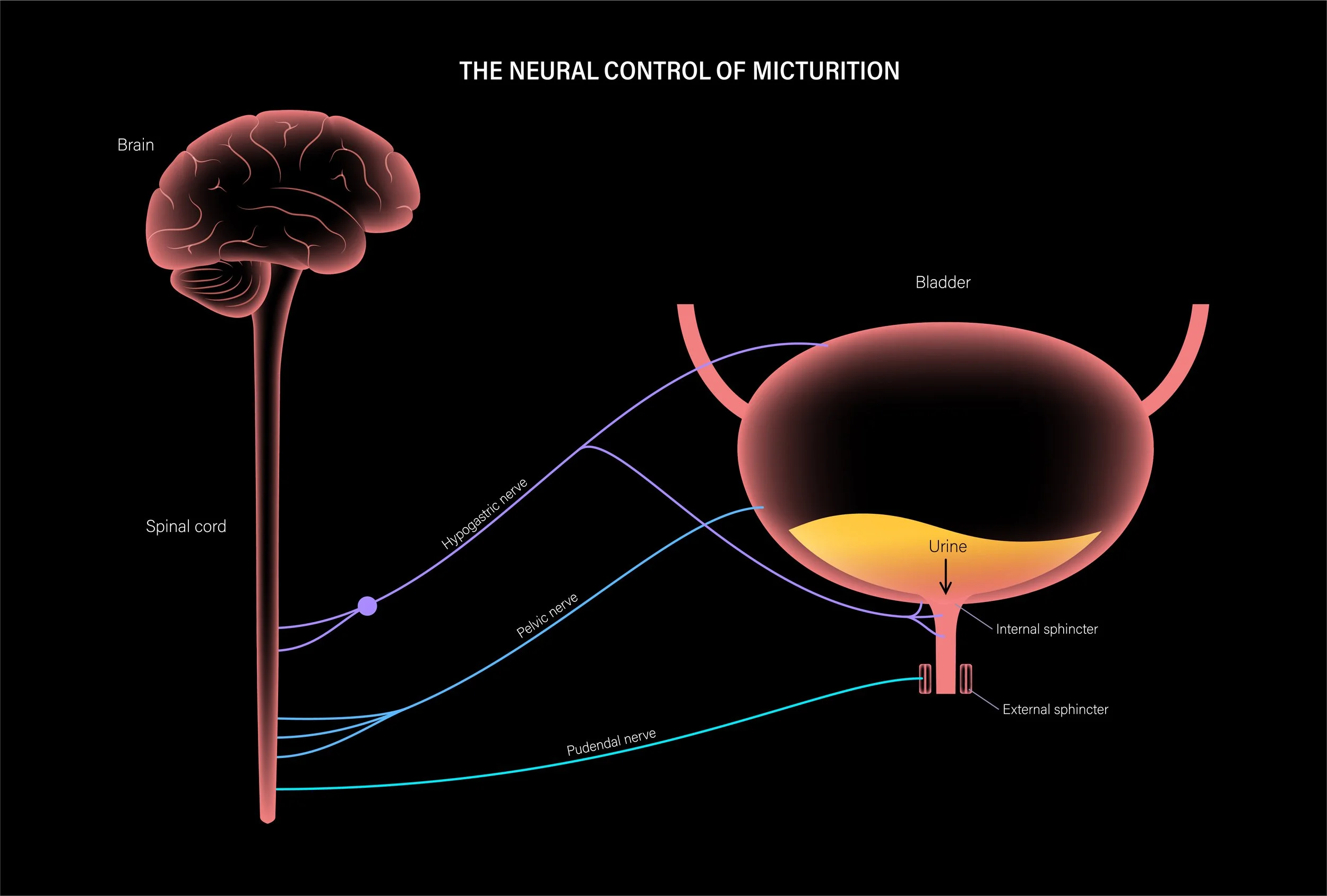
Urination (medically known as micturition) is controlled by internal and external bladder valves (sphincters). The brain sends a signal via the Pudendal nerve to open the external valve, and the bladder empties.
Trouble starts when the Pudendal nerve isn’t sending a strong enough signal to the valve to keep it tightly closed.
PUDENDAL NERVE ANATOMY
The left and right Pudendal nerves exit from the sacrum at S2–S4, pass under muscles and ligaments in the buttocks, then swing down around the medial sit(z) bones (Ischial tuberosities) into the pelvic floor. On the pelvic floor they split into several branches that enervate bladder and anus sphincters, muscles and genitalia.
The important Pudendal nerve thus has many functions. When damaged or compressed, it can cause several issues. For the purposes of this blog post, I’ll focus on the fact that it controls the bladder’s external valve.
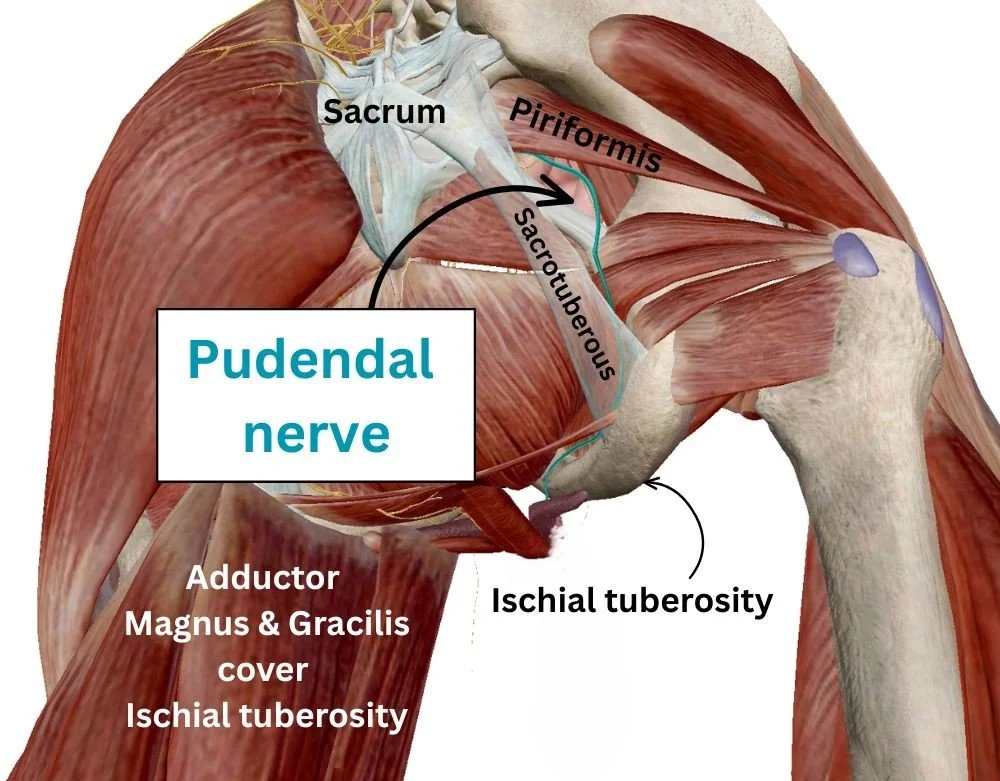
The Pudendal nerve can be compressed anywhere on its path (blue line) through the buttocks from the sacrum to the pelvic floor by one or more of:
Gemellus muscles
Sacrotuberous ligament
Obturator muscle
Adductor magnus /Gracilis muscles attaching to medial of sit(z) bone (i.e., Ischial tuberosity)
Scar tissue (episiotomies, tears) on the pelvic floor
DID YOU FALL? DOES ONE HIP HURT?
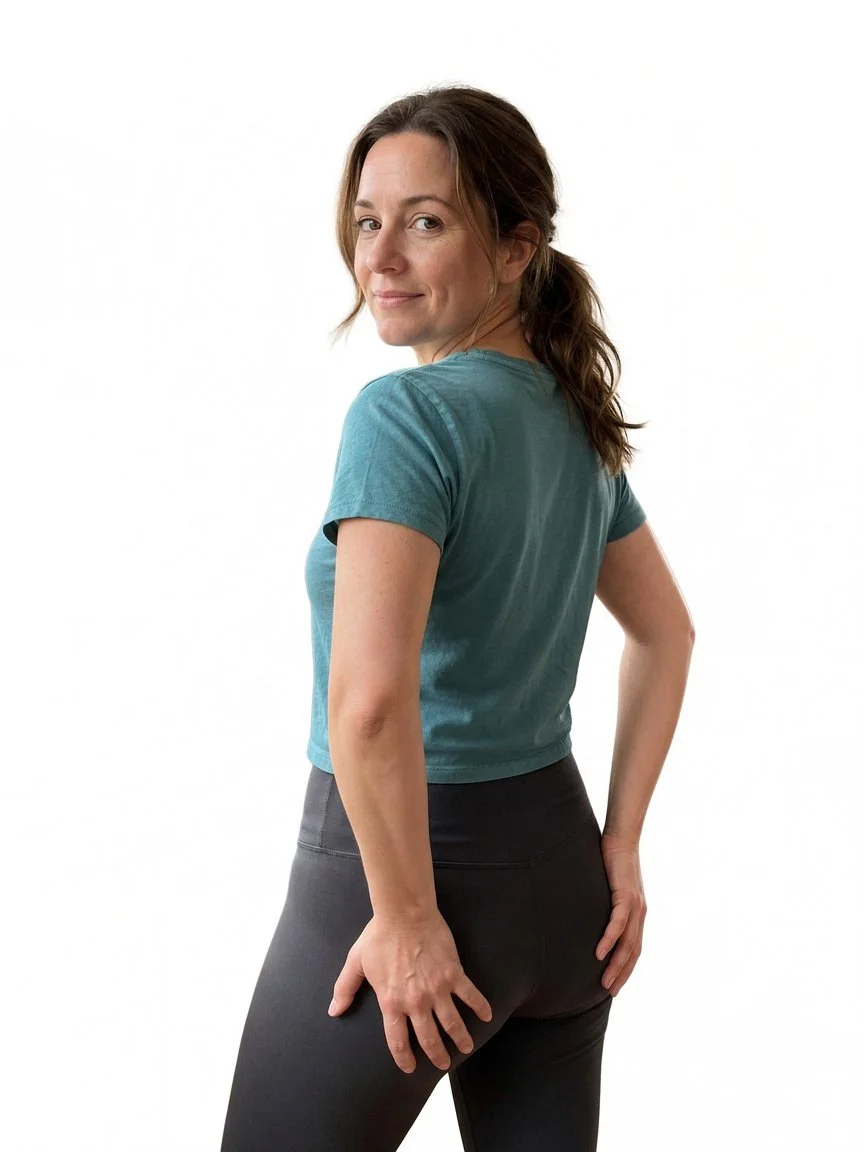
Those are clues that the muscles between the sacrum and the hip may be too tight, compressing the Pudendal nerve on that side of the body.
Compare muscle tension in your butt cheeks.
TWO CASES
Senior Female
A client told me she got up almost every hour at night to pee. Needless to say, she was exhausted. She’d fallen on one hip, which was a big clue to her frequent urination. After I released Gemellus muscle damage and tension compressing the Pudendal nerve, she only had to get up a couple of times a night.
Male, mid 30s
He was excreting blood-tinged urine. When medical tests ruled out serious issues such as cancer, his urologist told him that he “had a weak pelvic floor.” His mother gave him better advice. She encouraged her son to book with me.
It’s doubtful any urologist would have picked up the cause of his bloody urine. This relatively young man’s right Adductor magnus muscle between pelvis and knee was so incredibly locked in contraction from an old injury that it took me almost an entire session to release the muscle tension.
Recall that the Adductor magnus—a very strong muscle—attaches to the medial side of the Ischial tuberosity, exactly where the Pudendal nerve crosses over the bone. His tight Adductor magnus muscle compressed the Pudendal nerve at the bone, before the nerve even reached the pelvic floor. Incidentally, because the pelvic floor muscle is in line with that leg muscle, the pelvic floor was also extremely tight—not weak at all!
Stretching that locked up leg muscle wouldn’t have released the contractile tension. Instead, the muscle would tear at the Ischial tuberosity attachment, making his Pudendal nerve issue even worse.

Image source: Armin Forster, Pixabay.com
Narrow bicycle seats put pressure on the Pudendal nerve in that area between the Ischial tuberosities and the pelvic floor, causing several types of male and female urinary and reproductive system problems.
BEWARE OF THE GIMMICKS OUT THERE

No pill strengthens the bladder sphincter muscle! The Pudendal nerve enervates the sphincter. If the nerve is not doing its job to keep the sphincter firmly closed, leaks happen.
Before wasting money on pills, pelvic floor exercises, and vibration devices that promise to eliminate urinary incontinence:
If you have buttock muscle tension or hip pain, ask a manual therapist to release muscle tension between the sacrum and the hip, and on the inner thigh at the Ischial tuberosity, thereby freeing compression of the Pudendal nerve.
If urine leakage persists, book with a pelvic floor physiotherapist with Barral Institute Visceral Manipulation 3 (VM3) advanced manual training to address pelvic floor nerve compression, male prostate enlargement, and internal ligaments contributing to prolapse. Barral VM3 is taught worldwide.
Author Bio: Madeline McBride, M.A.Sc., P. Eng., is a certified Bowen therapist and neuromuscular therapist with Barral Institute VM3 training. She teaches nerve stimulation in her Neuromuscular Therapy for Urinary and Reproductive Systems Dysfunction workshop to manual therapists in Ottawa, Ontario, Canada. Due to the importance of specific hand placement, this workshop is not taught on-line.
Register for a workshop or read her blog posts at www.McBridePainClinic.com