
Can Your Therapist Fix Pelvis Rotations? 9 Questions to Ask
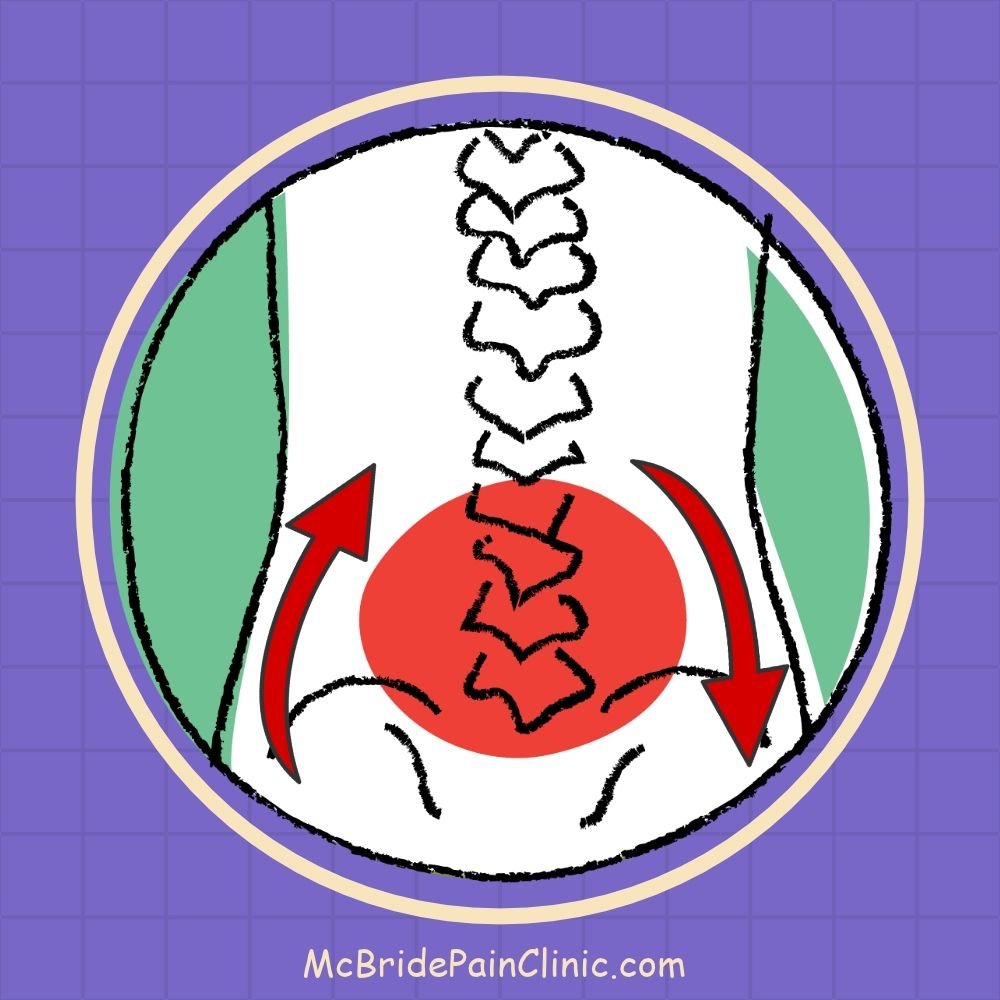
You’ve read my blog posts on the topic of pelvis alignment, checked your ilium alignment in a mirror or had someone assess the height of your iliac crests, and suspect that your pelvis is misaligned.
Unfortunately, many people waste time and money on various types of therapy that do not solve their problem. Readers email me asking how to find a physical therapist in their local area who is able to restore pelvis alignment. This blog post is for them!
What’s a Physical Therapist, Exactly
This post uses the generic term physical therapist. By that I mean someone trained to work on damaged muscles and tissue to restore mobility and eliminate pain; i.e., osteopath, chiropractor, massage therapist, Bowen therapist, or physiotherapist.
Medical doctors, not even specialists such as orthopedic surgeons or physiatrists, are trained to manually release muscle tension causing pelvis misalignment.
Most physical therapists treat the area of pain. Treating contracted muscles causing the ilium rotation—the source of the problem—is hit and miss unless the therapist has biomechanics knowledge.
You are a Partner in Your Healing
What you do can make or break the effectiveness of therapy.
While you are being treated by a physical therapist, stop all other types of manual therapy and exercises (except walking and gentle stretching) for the treatment period. Muscles need at least a week to heal between sessions.
Give the therapy a chance to work. Don’t sabotage it.
Interview a Physical Therapist
It’s your body. Prior to any treatment, you have a right to know:
whether the physical therapist understands what causes ilium rotations; and,
how the therapist plans to treat your body.
Download the checklist or copy and paste these nine questions.
9 Questions to Ask a Physical Therapist
Name of physical therapist ________________________
Type of physical therapist
☐ Osteopath
☐ Chiropractor
☐ Massage therapist
☐ Bowen therapist
☐ Physiotherapist
☐ other ___________________________
√ Correct answer to question
X Wrong answer or therapist does not know
Q1 Do you assess the relative heights of iliac crests with the client
☐ standing?
☐ seated?
If correct (√), continue to the next question. Bonus points if they assess leg lengths and neck rotation range as well.
If they do not compare heights of the iliac crests or the ASIS, end the interview.
Q2 What causes functional (acquired) scoliosis?
☐ Misaligned innominate (ilium) bones of the pelvis.
Q3 What techniques do you use to restore pelvis alignment?
Check all that apply:
☐ Palpation to find muscle tension.
☐ Manual therapy.
☐ Acupuncture.
☐ Dry needling.
☐ Other _________________
If the therapist says exercises and stretches, reply “Thank you very much for the information” and end the interview.
Q4 How many sessions will I need?
☐ 2-6 sessions.
☐ 6-10 sessions.
☐ More than 10 sessions.*
☐ Therapist does not know.
*If the therapist attempts to have you sign up for a savings package similar to “sessions twice a week for 12 weeks,” walk away. Resolving ilium rotations does not require months of treatment.
BIOMECHANICS QUESTIONS
LORDOSIS
Q5 Define Lordosis.
Correct answer:
☐ Lordosis is an exaggerated concave curvature of the lumbar spine, caused by double innominate (ilium) anterior rotation.
Q6 Why can lordosis cause back pain?
Correct answers:
☐ The iliac crests dig into the lower back, compressing nerves.
☐ The posterior aspects of several vertebrae will be compressed, potentially causing bulging discs, nerve compression, bone spurs and/or osteoarthritis.
Q7 What causes lordosis?
Correct answers:
☐ Excess contractile tension in the Iliopsoas and/or thigh muscles.
☐ Obesity.
☐ Late term pregnancy.
UNEVEN ILIAC CRESTS
Q8. When one ilium is higher than the other, what is your diagnosis?
☐ Upslip.
If they correctly answer “Upslip,” ask: What are two other possibilities?
☐ Posterior rotation of that high ilium.
☐ Anterior rotation of the low ilium.
Q9. What causes an ilium posterior rotation?
Correct answer:
☐ Contracted hamstrings.
Bonus points if they say it could be both an upslip and a posterior rotation.
Compare the number of √’s with number of X’s to help you decide whether to book sessions with a particular therapist.
Author Bio: Madeline McBride, M.A.Sc., P. Eng., studied civil engineering at Queen’s University and the University of Waterloo. Those mechanics and structural design courses inform her ability to assess in 3D, and problem-solve how muscle tension pulls a client’s skeletal structure out of alignment. Her engineering background, combined with several manual therapy modalities, produced this neuromuscular therapist and Canadian expert in restoring pelvis, jaw and spinal alignment. Madeline is able to resolve recent ilium rotations and related back, hip, knee and neck pain within one to four sessions. Long-standing, complex issues may take longer due to the body’s entrained compensation. Madeline teaches Biomechanics of Back, Hip, and Knee Pain in-person and on-line. She teaches Jaw and Sphenoid Alignment in-person only. Register for a workshop or read her blog posts at www.McBridePainClinic.com